Sunday, October 30, 2022

I Didn't Like The Deering Sierra And Sent It Back

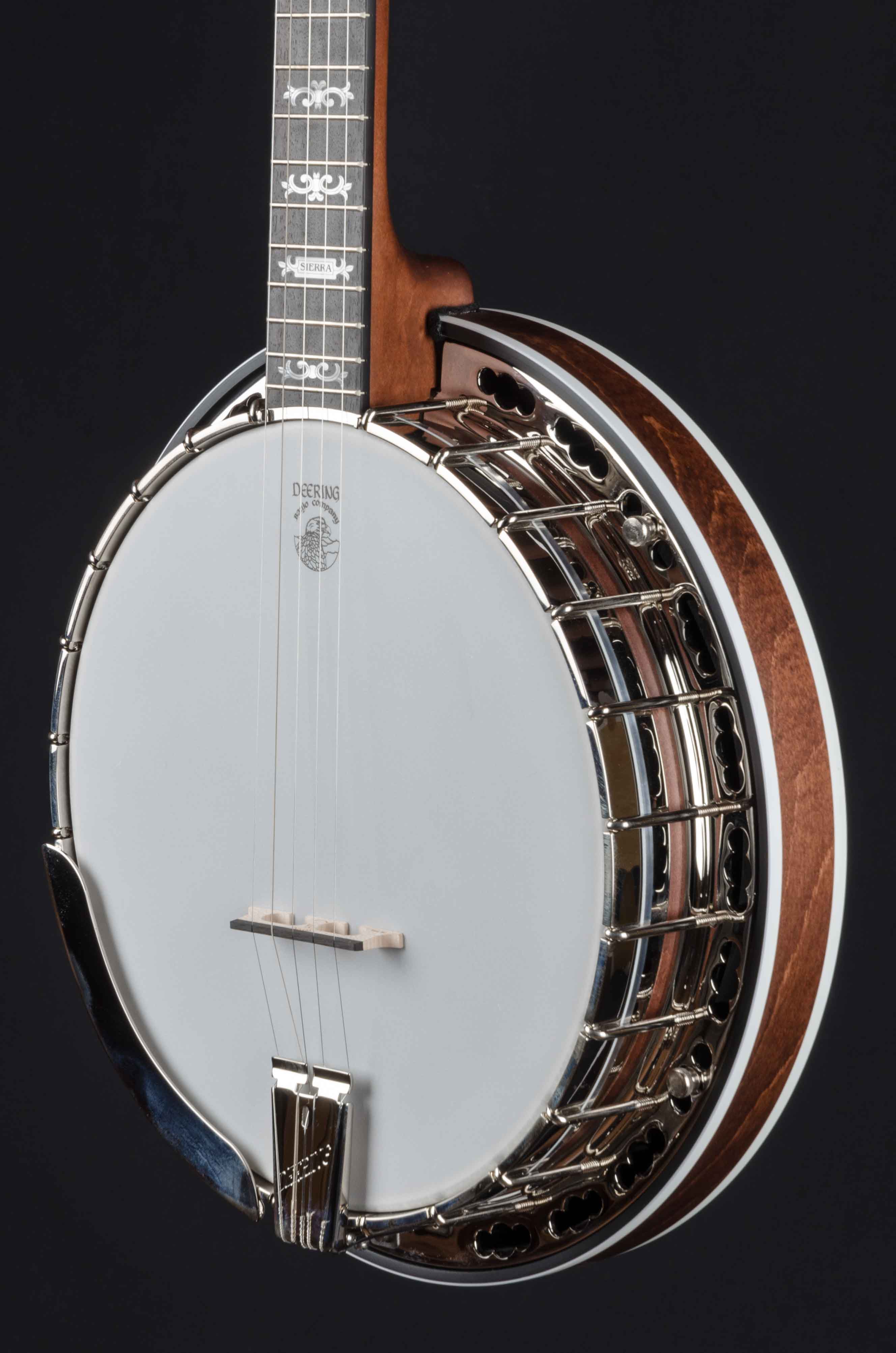
I finally received my Deering Sierra with a mahogany neck, which I ordered back on May 2nd, 2022. I got it at the end of September, but I hated the Sierra within the first 5 minutes! Man I sure appreciate my Recording King Elite-75 after playing that junk! Forgive me if you play a Deering Sierra, I am just expressing my humble opinion, I hated that thing.

Why didn't I like the Sierra banjo? Well, mainly because the neck feels cheap, like it was made in Mexico (no offensive to Mexican people). Also, the intonation was way off! The 3rd G string was always too high, especially noticeable on frets 1 through 5. The banjo wasn't even playable. I also have some issue on my Recording King with the 3rd G string being too sharp, but I just ordered a Compensator Bridge. Mine is a 5/8" bridge. I ordered a Grover brand from Amazon.com, which works well.

Anyway, I ordered the banjo from Banjo.com. The owner Barry Waldrep has been great so far, willing to take the banjo back no questions asked. Barry gives banjo buyers 30 days to return the instrument. I like having that grace period, a window of security, to decide if the instrument is what you expected. Kindly said, I was misled by Deering's website, because they give the impression in their Sierra video that the Sierra has the same guts as the most expensive Deering banjos, but just lacks the pretty aesthetics. THAT IS NOT TRUE!!! In my humble opinion the neck on the Sierra is crap! After playing an Elite-75 Recording King for the past 5 years, I didn't like the neck on the Sierra from the first 5 minutes I played it. I paid $2,799 for the Sierra.

So I went ahead and did what I should have done in the first place, I spent the extra money and ordered a high-end banjo. Ouch! I ordered the Deering Golden Era for over $5,000. I have learned that you will either feel pain in your wallet upfront, by purchasing a quality instrument, or else you will feel pain in your soul for years to come as you play an inferior instrument. I like being honest with people, no bullcrap, to be helpful. I will let everyone know what I think about the Deering Golden Era, if I think it is really worth over $5,000 for it. I almost bought the Deering Calico, because it is more punchy and in your face, but I decided to go with what most players are getting, to be safe. I figure thousands of Golden Era players can't all be wrong!

I admit that I am not too familiar with the different brands of banjos, since I am a steel guitar player mainly, but thanks be to God, I do have a great ear for music. I know good tone when I hear it, and thin shabby tone too. I love playing Hawaiian steel guitar. Here is a video that I recorded back in 2017 when on lived on the island of Guam (I moved there in 2004 and decided to come back to the United States in 2021. I chose Pensacola, Florida initially. It is okay here. I do miss Guam, but the cost of living is MUCH cheaper in Florida than Guam. I think you will like this video...

Hawaiian Steel Guitar From My Front Door

If anybody is interested in learning to play Hawaiian steel guitar, or pedal steel, I encourage you to do it! There is a steep learning curve at the beginning, but once you surmount the first few months, you'll be home free because it gets a lot easier. It is a fact that many steel guitar players also play the banjo, because there is a common overlap since both instruments require playing with picks and picking patterns. In other words, if you already play the banjo, you've got a big head start on playing steel guitar (and vise versa). If you e-mail me, David (kingjamesbible77 @ gmail DOT com), I will gladly freely share resources and backing tracks for what I have.

Also, check out my SteelC6th.com music website. On my website you'll find a few hundred Hawaiian songs 9help yourself to download and share MP3's), which is the best way to learn any instrument, listen to lots of that particular instrument so you can get the sounds into your head. I love to help, teach and share with others, so please feel at home.

I am a pretty good banjo player and I LOVE Dave Hum's awesome free-spirited style. But I am still learning the actual songs. I bought a Hoffman bass last year so that I could start making Dave Hum style backing tracks. I haven't given up friends, I'm just busy with other stuff. One day at a time. Lord willing, I plan on making more Dave Hum backing tracks, and improving the ones that I have already made. I realized last week that most banjo players are still learning like me, so we cannot play fast at Dave Hum's professional speed. I plan soon to also provide two slower speed backing tracks (a slow and a medium tempo), for newbies to banjo like me. I also bought a Gretsch bass as Guitar Center, because the Hoffman bass wasn't giving me the punch sound that I wanted. I like the Gretsch better, which has a nice Motown kind of punch to it.

Here is a video I made of me playing my Sho-Bud Double-10 pedal steel guitar...

Me Playing 'Born To Lose' on Pedal Steel Guitar

I have been diligently trying to analyze Dave Hum's backing tracks. At first I thought he just used a bass along with some percussion from the Reason software that he used, but on some recordings he is indeed playing rhythm guitar, mandolin, keyboard and other instruments. I prefer to use MixCraft Pro to make my backing tracks, simply because it is what I am used to. I tried using FL Studio, Ableton and Pro Logic, but they were all difficult to get used to for me. FL Studio is aggravating to me. I am disappointed how complicated and backwards a lot of this Musical Production Software is to use (not user friendly at all). For example: In MixCraft when I right mouse-click on a track, I get a menu, which makes sense and is convenient. But in FL Studio right mouse-clicking on a track deletes it!!! Pardon my ignorance. I am a normal guy, who loves music and have been playing guitar since age 15 (40 years ago). I am age 55 now (where did all those years go...lol).

From what I have learned so far, most Musical Production Software is geared toward piecing together prerecorded sounds for nightclub type dance mixes, which is NOT what I am trying to accomplish. I want quality backing racks with real instruments. Dave Hum played his own musical instruments, making quality backing tracks. The problem with most available backing tracks is that they are CLUTTERED with too many instruments! One of the things that I love about Dave Hum's tracks is that they are simple, just some percussion and bass. But when I go to play along, I have difficulty following along because there's not enough music to follow along (with my limited skills). So I am going to experiment to see what works.

I just bought a 21-key autoharp from the autoharp store for $546. It sells for $642 on Amazon.com without a free gig bag or digital tuner. So it is a great deal at The Autoharp Store. The free gig bag is very nice and padded, and I really like the chromatic digital tuner. After I ordered the autoharp, it arrived in just 3-days. My autoharp is electric, with fine tuners (which I recommend because without them it is difficult to get the tuning accurate). The harp I purchased is something new from Oscar-Schmidt called the "Americana" tuning. This new tuning is especially for Bluegrass and folk players, which is why I bought it to learn and hopefully incorporate it into backing tracks.

I have an old neck injury (stenosis and radiculitis) going back decades, which causes me much bodily pain, burning nerve and discomfort 24/7, so most of the time I just don't feel like making music. But I love music so much that I am compelled to play even while in pain. I thank God that I can play any instrument at all, after having two major neck surgeries (in 2009 and again in 2010). Unfortunately the second surgery really messed me up worse). And to add insult to injury, because of the epidemic of drug overdoses across the United States, my doctor refuses to prescribe more than the minimal amount of Oxycontin (I need 80 mg per day, but am only allowed 40 mg). That is so ridiculous and wrong. I used to take 140 mg per day on Guam, but due to dehydration I requested lowering my dosage. Now I can't even get the 80 mg. per day, so I suffer all the time in unnecessary pain in my neck.

The weight of the banjo doesn't bother me too much for the first hour. I bought a thick padded shoulder strap, which really helps. In feel sharp radiating pain down my right arm at times, which prevents me from playing too fast on the pedal steel guitar. The longer I pick, the more pain I feel down my right arm. So anyway, if you are a praying Christ, I would humbly appreciate that you pray for me when you think of it. THANK YOU in advance!

I honestly don't like the way most people play the autoharp, but after watching Jo Ann Smith play her diatonic tunings, that sparked my interest in learning to play the autoharp. She plays soft and gentle much of the time, whereas most plays aggressively strum the autoharp. I did what Jo Ann recommends for all autoharp enthusiasts, I ordered The Autoharp Owner's Manual (I got mine from Amazon). This helpful book explains how to convert multi-key autoharps into diatonic tunings, and provides the possible chords you might choose from. I think autoharps are way cool! I bought the 21-chord autoharp learn to play it first, and then later on if I am still interested I plan to but a 15-chord autoharp and convert it into a diatonic tuning.

God willing, I want to purchase a dobro within a year. I cannot afford to pay $5,000 for a dobro. If you want a truly professional instrument, you're going to need to dig deep to pay for it!  A basic Northshore mandolin costs at least $3,500. Their F5 model sells for $8,000. Great fluffy biscuits in the morning!!! I wanted a truly professional banjo, so I spent $5,000 for a Deering Golden Era. Deering is backordered, so I have to wait the next production schedule. It will be a few months wait I'm sure. Barry Waldrep said he is still waiting to hear from Deering.

For now I am playing my Recording King Elite-75, which I paid $1975 for in 2018. I bought it from Ross Nickerson. The Elite-75 (it has a maple neck; the Elite-85 has a mahogany neck). My neck is maple, which is brighter. The Elite series have a 27 3/8" neck, which is longer than the standard neck length of 26 1/4". Personally, I like the longer length neck, because it gives the banjo more depth of tone. The aesthetics are amazing on the Elite-75, pretty curly maple. But the Recording King lacks that much sought after Gibson tone. A truly professional banjo should have a quality "boing boing" sound to it, not just sound like a thin tin can with strings on it. TONE IS EVERYTHING!!!

So, by God's grace, I am working on learning the mandolin, bass, autoharp, guitar, banjo and I still enjoy playing steel guitar. I love any musical instrument with strings! My ultimate goal is to record some banjo videos, once I make some quality backing tracks and feel comfortable enough in my banjo playing to record it. Practice, practice, practice! I like something that Eddie Van Halen (1955-2020) said when asked by a fan how many hours a week does he practice. Eddie replied, “I've never practiced a day in my life.” I like that. In other words, Eddie always gave it his best, he didn't have a lesser standard of playing at home while practicing than he did when performing live concerts. I also like what steel guitar legend Jerry Byrd (1920-2005) said: “When you are as good as you want to be, you're as good as you're going to get.”

I also enjoy playing the ukulele. I like my electric tenor sized Oscar-Schmidt ukulele from Indonesia. I recorded these 8 songs in 2015 on Guam. Music makes the world a better place!

Faith Is The Only Righteous Thing That I Can Do

I just wanted to share these things with you dear reader. No doubt you love music like I do, which is why we gravitate toward musical instruments. I think the steel guitar is the most beautiful music this side of Heaven, but the banjo is the happiest of all instruments in my humble opinion. It's hard to play a sad song on a banjo, even in minor chords. I THANK GOD FOR DAVE HUM!!! I pray for his family regularly (Mel, River and Perri). Perri is 16 years old this year in 2022. My heart goes out to her, not having her Dad as a teenager; but she has a very rich heritage to be proud of, from her Dad's profound influence upon so many tens of thousands of people around the world. I am amazed that Dave Hum, while dying, found the strength and ability to record so many precious videos for everyone to enjoy. Dave videos to me are worth more than gold, and I mean that!

Thankfully to God, I became a born-again Christian at age 13, in 1980. Dear friend, I want you to have the same unspeakable joy of knowing that you name is written in Heaven. My favorite book written by a man is titled: "I Never Knew You" by Michael P. Bowen. I encourage you to please take the time to read this free book (in .pdf format), which will clearly show you how to KNOW 100% for certain that you're going to Heaven someday. The book is written from a gentlemanly perspective, comparing the plan of salvation of 15 big name preachers, to what the Word of God teaches about salvation.

I never get tired of re-reading this helpful book by Michael Bowen. It is my humble desire that you too can KNOW your name is written in Heaven (Luke 10:20). I am an independent fundamental Baptist by religious affiliation, but that won't get me to Heaven. It is only by what Jesus Christ did for me through Calvary's cross, shedding His precious blood and dying for my sins, and resurrecting from the dead three days later, that anyone can be made righteousness through faith alone in Christ. Philippians 3:9, “And be found in him, not having mine own righteousness, which is of the law, but that which is through the faith of Christ, the righteousness which is of God by faith: Simply take God at His Word oh needy sinner, receiving Christ's sacrifice on the cross as full-payment for your sins; believing that Jesus was buried but is risen, and you will be immediately, irrevocably and forever saved (I Corinthians 15:1-4).

Remember, we cannot get into Heaven based upon OUR merit. We are sinners by nature and by choice. The only way that anyone can enter into God's Kingdom is that we must seek to enter God's Kingdom based upon the merit of JESUS CHRIST. Salvation is not a reward for the righteous, it is a gift for the guilty! Salvation is not doing your best, it is having Christ's best put to your account through receiving Him by faith. The true Gospel always points you to CHRIST; a false gospel always points to YOU. Jesus Christ is my only righteousness!

THANK YOU for your continued interest in my BanjoHeaven blog.

Monday, September 26, 2022

Gold Tone OB3 "Twanger" Does Not Sound Like Prewar Gibson Mastertone

I have nothing against Gold Tone instruments. I think it is great that many companies are producing more affordable high quality instruments, replicas of classic pre World War II musical instruments. For example: Kentucky brand mandolins, Eastman brand mandolins, Recording King banjos and Dobros, Epiphone (Gibson's China line of less expensive instruments), et cetera. Let's face it, most people just don't make enough money to shell out $5,500 for a Deering Golden Era or Deering Calico banjo. In my humble opinion, musical instruments are way overpriced. But if you want something really nice, you're going to have to feel the hurt...lol.

In the following video, if you listen carefully to Gabe Hirshfeld compare a Gold Tone OB3 “Twanger” versus a prewar 1931 Gibson PV3 9580-4 flathead (originally a plectrum banjo). If you listen carefully, you can hear the beautiful sustain and quality in the Gibson, that the Gold Tone simply does not have. That little big of difference is everything musically!

Let's compare a Gold Tone OB-3 Twanger to a Pre-War Flathead

In this helpful video, you can hear Kelly Emerson compare a Deering Calico to a Deering Golden Era banjo. They both sound excellent! Although in the video Kelly said he chose the Calico, down in the comments you'll read where Patrick C. Randall said Kelly told him he actually bought the Golden Era banjo instead.

The Deering Golden Era sells for about $5,000, which is the closest banjo that you will find. (Good night in the morning!) But it is worth every penny! You get what you pay for. There are many banjo builders in the United States, but ultimately what matters most is the quality of sound that the banjo produces. At least that is what most banjo pickers want. Some others may prioritize the banjo's beauty instead, or the price point. I look at it this way—you're going to spend thousands of hours playing this thing, so why settle for an inferior instrument? I know it is painful shelling out $6,000 for a Deering Golden Era banjo, or a Paul Beard Model-E Dobro, Northfield mandolin ($8,000), et cetera. But if you want that coveted authentic instrument sound, then you must pay the price.

I think every musician should pick the one instrument that they play the best, which they are passionate about, and buy an expensive instrument of that one. I love the banjo, so I don't mind paying $5,000 for a Deering Golden Era or a used Gibson ESS (Dave Hum played a 1992 ESS Gibson). Although I love the mandolin, I am not passionate about it like I am the banjo. So I plan to buy an Eastman or Kentucky model mandolin made in China, that is high quality. I like the MD-515 Eastman mandolin. I love the Dobro, but $4,500 is out of my reach financially for now. So I may have to settle for a Gretsch G9231 Bobtail Dobro for now, which is not bad. I like the Paul beard Legend cones, which you can buy from Paul Beard for $80 and put into a different dobro. Most of the sound is in the cone. Cheaper cones when tapped on sound like old hubcaps, but quality cones sound like bell brass.

Anyway, some people will no doubt disagree with me on the OB3 Twanger. If you like it, that is all that matters. But for me, it is an inferior (but still somewhat nice) imitation.

"Cheat-A-Keys" Tuners Are So Much Better Than "Keith D Tuners"

I paid $300 a few years ago for just TWO Keith D tuners (for my 2nd and 3rd banjo strings). I ordered them directly from the company that makes them in New York.

Honestly, I hate the Keith D Tuners and do not recommend them to anyone! The Keith D Tuners replace your original tuning keys, so you need to completely remove and replace the original tuners the Keith D Tuners. The reason why I hate them is because they don't stay in tune, and when you need to readjust them, it is is a big hassle! Each Keith D Tuner has two separate adjusting knobs on it (one for setting the raise limit for the string, and the other for setting the lower limit).

If you banjo wanders slightly out of tune, you have to mess with the Keith D Tuner every time to get it back into tune. Each Keith D Tuner has three things to turn! You have the low limit set knob, the high limit set knob, and then the tuning peg itself that raises and lowers the string. So if your banjo is a bit out of tune (which is about every 5 minutes on my Recording King Elite-85, because it has a higher tuner gear ratio which makes them quicker to adjust but more sensitive), you cannot just turn the tuning peg to correct the pitch. You have to mess with the set screws on the Keith D Tuner. Since the Keith D Tuner has a set screw that LOCKS your high limit, you must readjust your Keith D Tuner set screw for the high limit. 

Also, unless you use a pair of pliers to tighten the set screw so it won't move, the set screws can only be tightened so much with your fingers, but it is not enough pressure to prevent the tuning from wandering. But when I do use pliers, then I have to use pliers to loosen the set screws every time I need to readjust the tuning, which is quite often. If you have ever owned any Keith D Tuners, you know what I am talking about, and it is frustrating!

The Cheat-A-Keys tuners are so much better for various reasons. You can order some nice Cheat-A-Keys from Banjo.com, but right now they are out of stock. I think the ones they sell look nicer. I ordered mine from Gold Tone in Florida (they're all out of stock right now), which are more plain looking.
  • The first reason why Cheat-A-Keys tuners are much better is that they operate completely separate from your tuning keys. This means you CAN make adjustments to each string's pitch without messing with the Cheat-A-Keys device. Nice!
  • Secondly, once set properly, the Cheat-A-Keys stays in tune! It just makes everything so much more simple, by keeping the D Tuners a separate function from the open string tuners.
  • Thirdly, you don't need to remove your original banjo tuners to use the Cheat-A-Keys. I made the odd decision to buy gold plated Keith D Tuners, but my original tuning keys are chrome (so they look out of place). I just like the gold color and wanted some gold on my banjo...lol.
One of the disadvantages of the Cheat-A-Keys is having a weird looking device attached to your headstock. It is definitely a conversation piece if you like being asked questions. I like them myself.
A demo of CHEAT-A-KEYS Tuners

Here are some more varied opinions from banjo pickers about the Cheat-A-Keys device. I personally like the Cheat-A-Keys tuners much better than the annoying Keith D Tuners. To each their own. Here is a helpful video on how to install Cheat-A-Keys D tuners...

Installing Cheat-A-Keys Banjo D Tuners

Sunday, September 18, 2022

Learn Don Reno's Banjo Style Of Playing

I found something new and very helpful this week. His name is Jason Skinner and he is without question the most avid Don Reno fan in the world. I really love what Jason has done to help banjo players. He has recorded an 18-part superb set of banjo instruction lessons for banjo enthusiasts. The first video covers basic information, but in the following videos Jason gets into some excellent banjo stuff...

Beginning Don Reno Style Banjo with Jason Skinner - Part 1

I really appreciate when banjo artists share what they've learned with others. I give everything I learn away for free, and always will. I'm not putting down musicians who sell stuff, I get it, they need to eat. But there's just an excellent spirit (like Daniel had in the Bible), when musicians share what they've learned for the pure love of music. Daniel 6:3, “Then this Daniel was preferred above the presidents and princes, because an excellent spirit was in him; and the king thought to set him over the whole realm.

By the way, my favorite lesson in Jason Skinner's awesome banjo series is part 13, a song written by Don Reno called: “I'm Using My Bible For A Roadmap.” There's some really cool banjo fills and licks in here. Also, you can find free karaoke backing tracks on YouTube for this song...

I'm Using My Bible For A Roadmap” (written by Don Reno)

It is my desire to help other banjo enthusiast, sharing the things that I learn. I'm spending a lot of time in the woodshed workshop picking, getting better and learning my banjo. God willing, I plan to make some YouTube videos down the road. But for now, it is exciting to learn and share! If you haven't watched Jason Skinner's Don Reno YouTube lessons yet, I really think you'll enjoy them. God bless!

“When you practice slow, you learn fast.” 
Barry Hunn, Deering Banjo Company

Waiting For New Deering Sierra Mahogany Banjo

Thank you to all my BanjoHeaven fans for your continued interest in my blog. I haven't been posting many blogs, simply because I've been busy picking the 5-string banjo! When I lived on Guam I spent my time playing the Hawaiian lap steel guitar. My first love will always be the pedal steel guitar. But since I've moved to Pensacola (in the deep south) in July of 2021, my love for Bluegrass music has been rekindled. I've been working on my banjo picking mostly.

Dave Hum (1966-2012) started playing the banjo in 1996, when his father-in-law handed him an old banjo, and the rest is history! It is amazing how fast he progressed on the banjo. I love that man! I pray for his wife and daughters in Salisbury, England regularly. They have a rich heritage to be proud of in Dave's music. I humbly want to do what I can to help preserve Dave Hum's musical legacy. As a lifetime musician myself, I rarely find music that inspires me. I'm talking about music so special that even after hearing it hundreds of times, you never get tired of hearing it.

Anyway, let me share some interesting things with you friends. By God's goodness and grace, I ordered a new Deering mahogany Sierra banjo back on May 2nd from Banjo.com for $2,799. Deering's Sierra line is backordered. So I need to just be patient and wait. Even Guitar Center is only taking reservations for the Sierras, backordered as well. I figure it is worth the wait for a new banjo fresh off the assembly line! I ordered it from Banjo.com because I am trusting Barry Waldrep, that his workers will correctly install the 7th street railroad spike.

I've never played a Deering banjo, but I've read only good reviews. Like most everyone else, I dreaded spending $3,000 for a banjo, but after seeing Jens Hans Kruger's $15,999 banjo, I feel fortunate...lol. I love Hans' playing. By the way, Jens teaches a free masterclass on YouTube, which is definitely worth watching.

Deering Sierra Banjo

For now I am playing a Recording King Elite-85 (maple neck), which I bought from Ross Nickerson back in 2018 for $1,795. That is my only banjo. I really like my RK. It has a bone nut, longer than standard 27 3/8" scale, pretty curly maple resonator, and I love the mother of pearl heart and flower inlays. It is a replica of the prewar Gibson Mastertone. Yesterday evening I put new strings on it, tightened the head (it was fairly loose), tightened up a loose coordinating rod in the pot that was rattling at the nut, used mother's chrome polish that I bought from Auto Zone to polish the metal, and it sounds great! But I need to buy a compensator bridge, because my G string is sharp at the 12th fret (but the other strings are in tune). I am looking forward to comparing the mahogany neck 26 1/4" Deering Sierra, to my maple neck 27 3/8" Recording King. I think every banjo player should have at least 3 banjos!

I really wanted a banjo that wasn't made in China. Hence, Deering. I was sad to learn that Stelling banjo is closing their doors after 48 years. Gibson's banjo factory was completely destroyed in 2010, when the Cumberland River overflowed in Nashville. Gibson didn't think it was worth reinvesting in another factory. Dave Hum's main banjo was a 1992 ESS (Earl Scruggs's Standard) banjo. I am curious about Hatfield and Huber banjos. I've never played either. I love banjos!!!

I heard Jason Skinner make a great statement today in one of his videos: “Good tone is 90% the player and 10% the banjo.” I agree with that. If you watch Dave Hum play the banjo, he picks with authority, taking charge of the instrument. That makes a big difference in tone. He can do that because he knows exactly what he is going to play next. In sharp contrast, newer players tend to “wing it, just grabbing a handful of strings...lol.

I read a very helpful comment recently by Barry Hunn on Deering's website: “When you practice slow, you learn fast.” That is so true! I know because it works for me. When I play a new song very slowly, following the tablature exactly, to make sure that I get every note just right, then I KNOW what I am doing. So as I play those exact notes and slowly get faster, I know that I am doing it right. That is the only way to properly build accuracy with speed. Thanks for reading.

Banjo 5th String Capos

Hey, I just ordered an Earl Banjo Suspender 5th String Capo from Old Town School of Music in Chicago. They're only $14.95. I refuse to spend $59 for a Banjo Highway 5th String Capo. I mean, I would if I had no choice, but that is a steep price! I got an idea from reading an article on the BanjoHangout forum today, about using a guitar string peg as a 5th string capo. The pegs are slotted, which you can slide right over the fret. I'll cut the peg. ...


I admittedly haven't tried it yet, so I'm not sure if it will work. I had asked Barry Waldrep at Banjo.com to install a sliding capo, but he advised against it, because it lowers the resale value of the Deering banjo. So I told him to just install a 7th fret railroad spike.

I actually ordered a small hand drill, bits and railroad spikes from Stew Mac and installed my own spike on a Recording King Madison mahogany banjo, that I bought for my youngest daughter in 2019.

Sometimes when I'm playing melodic style, the railroad spike on the 7th fret gets in the way. I'm starting to lean toward not using railroad spikes, but I haven't come to a conclusion yet. I've never used the Earl's Banjo Suspender Capo before, so I am curious. I noticed that Dave Hum uses a sliding capo on one of his banjos.

Earl Scruggs and Steve Martin

Wednesday, April 27, 2022

Dave Hum On How He Makes His Own Banjo Backing Tracks

In his own words, here's how Dave makes his own backing tracks...
The album “TRAVELLING LIGHT” is a culmination of 15 years passing. When I have had spare time between teaching, learning, busking and making videos of 5 string banjo tunes , I have recorded original compositions which have more of a unique contemporary approach.

I arrange and play all the instruments and program the beats myself - The software i use is Reason for the midi samples such as basslines, loops and effects - which lets me export as WAV files into a program called Sonar for the audio recordings - i then combine the results in Sonar - to record the actual instruments i use a Zoom H2 straight into my laptop which makes the whole process easy as it has it's own soundcard which Sonar recognises.

I enjoy many styles of music and feel that the banjo is capable of being more than a bluegrass, Celtic, ragtime or classic style instrument. Essentially, a lot of the techniques used in the Travelling Light album on the banjo are the same as the aforementioned but by giving the banjo, and mandolin for that matter, more of a contemporary rhythm and backing so to speak i think they can be used to play most styles of music if sympathetic to the emotion of the tune. —Dave Hum (from his website)
Here's the newer Zoom H2 model. There are also more advanced models of the Zoom unit, reasonably priced, that have guitar inputs. It appears that Dave recorded his musical instruments live, and not directly into the recorder. A lot of people are fascinated with Dave Hum and his banjo music, myself included. I had read in the Banjo Hangout Online (BHO) forum that Dave made his backing tracks using Reason software, so in my ignorance I went and tried it for free for 30 days at their website.

It turns out that Dave only used Reason for his MIDI portion of his recordings, and nothing else. In fact, Dave recorded his instruments with a Zoom H2 personal recorder into his laptop, using Sonar software. I'm sure a lot of people have been frustrated trying to figure out how to use Reason (now called Cakewalk) to make Dave Hum's style of backing tracks. Now you know the whole story!

By the way, the word “travelling” is not spelled wrong by Dave, in England they spell certain words different than in the United States. For example: “Arkansas Traveller”. I am very thankful to Dave and his family for sharing this information with others. I pray for Dave's family often, as I know that is what he would want, and am glad that God made Dave Hum!

5 String Banjo Instruction [1967] - Earl Scruggs

5 String Banjo Instruction Album [1967] - Earl Scruggs